Relationship-Building Strategies
Practical steps to strengthen trust, connection, & classroom climate
Building strong teacher-student relationships is one of the most powerful ways to transform a classroom. Whether you began with the CLASS observation, the SEL & EQ survey, the relationship mapping tool, or the well-being check-in, each step was designed to help you see where your relationships are thriving and where they could grow.
The strategies on this page take the next step. They connect directly to what you discovered about your practice and offer concrete ways to strengthen trust, belonging, and student voice. When you put them into action, you’re not just improving day-to-day interactions; you’re creating a classroom that meets students’ needs for safety, connection, and respect (Maslow), supports social-emotional growth (CASEL), and models secure relationships (Attachment Theory). These shifts lead to calmer classrooms, stronger engagement, and better academic outcomes, which is exactly what CLASS measures.
By intentionally practicing these strategies, you move closer to becoming the kind of teacher-leader who sets the emotional tone for the classroom and helps every student thrive.

Daily Interactions
Small moments, big impact.
Your CLASS self-observation gave you a snapshot of what your classroom feels like every day. This section helps you turn that snapshot into action. The way you greet students, respond to their questions, and celebrate their successes all contribute to creating a positive classroom climate. When those moments are consistent and intentional, students feel safe, valued, and eager to participate. Here you will explore strategies that help you strengthen those moments, noticing and responding to student cues and building routines that make students feel welcome and engaged from the moment they walk in the door.
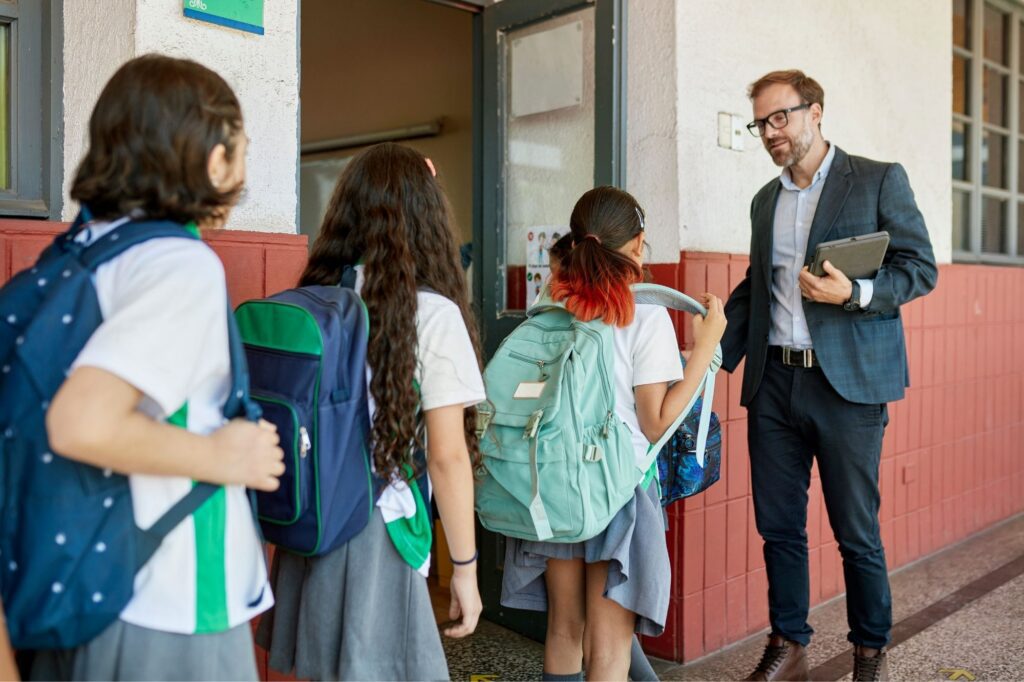
Positive Classroom Climate: The Foundation of Belonging
A positive classroom climate is not simply about smiling or saying hello at the door; it is about building an environment where students feel they truly belong. This means creating moments of connection that go beyond surface-level actions. Students notice when teachers act with sincerity and when they are simply going through the motions. A positive climate is felt when every student believes their presence is wanted, that their voice matters, and that they can take risks without fear of embarrassment.
If you are a teacher struggling to build these connections, these strategies are designed to help you create small, consistent moments of trust that students can count on.
Level 1: Building Foundational Trust
The goal here isn’t to fix everything at once, but to create a routine of genuine connection that helps students feel seen and valued from the moment they enter the classroom.
The “100% Welcome” Routine
A student’s first 30 seconds in your classroom sets the tone for the entire period. The goal is to make every single student feel truly seen and wanted, in a way that is respectful of their background.
The How: Stand at your door and offer a brief, personal welcome to every student by name. The greeting should be genuine and can be customized to the student. This could be a smile, a quiet “hello,” a wave, or a non-verbal check-in.
A Note on Eye Contact: A quick, friendly glance can convey warmth. However, be aware that in some cultures or for students who have experienced trauma, direct eye contact can be challenging or perceived as a sign of aggression. Offering a variety of greetings allows you to adapt to what makes each student feel most comfortable and respected.
A Non-Verbal Check-in: A simple check-in gives you a quick snapshot of your students’ emotional state without putting anyone on the spot.
- For Older Students (Grades 4 and up): Use “Fist to Five.” Hold up a fist and ask students to show you how they’re feeling on a scale of one to five. A fist means “I’m having a rough day,” and five fingers means “I’m feeling great.”
For Younger Students (Grades K-3): Use a “Thumbs Check.” A thumbs-up means “I’m feeling good,” a thumb to the side means “I’m okay,” and a thumb down means “I’m having a rough day.”
The Power of “Specific Praise”
Generic praise like “good job” is often meaningless to students, especially if they are struggling. It doesn’t tell them what they did well, so it doesn’t help them learn. Authentic, specific praise is a powerful tool for building rapport.
Focus on the Effort: Acknowledge the process, not just the outcome. Instead of “That’s a great drawing,” try, “You used so many different shades of blue in that sky. That took a lot of focus.“
Acknowledge Growth: Point out how they’ve improved. “Remember last week when you had trouble with that concept? Look how you’ve mastered it today.“
Be Genuine: Your praise must be authentic. Students can sense insincerity. Only offer praise when you truly mean it.
Level 2: Fostering Community and Social-Emotional Growth
Once you have a baseline of trust, you can move on to strategies that build a stronger, more connected classroom community. The goal is to build community while teaching students the relationship skills they need for success.
Intentional Beginnings and Endings
Class is more than a series of lessons; it’s a place for people to learn together. Creating a rhythm with intentional openings and closings gives students a sense of safety and predictability.
Start with Connection: Begin your class with a brief community-building moment. This could be as simple as asking students to share a “rose, bud, thorn” from their day—a “rose” is a success, a “thorn” is a challenge, and a “bud” is something they’re looking forward to. This takes less than five minutes but pays huge dividends in trust.
End with Reflection: End the day by asking students to reflect on their learning. “What’s one thing you learned today?” or “What’s a success you had in class?” This helps students consolidate their learning and leave on a positive note.
The Art of “Curious Listening”
Students want to feel known. If a teacher only talks to them about their grades or their behavior, they won’t feel a deep connection.
Ask Open-Ended Questions: Instead of “Did you do your homework?” ask, “What was the most challenging part of the homework?” This encourages a conversation.
Listen to Connect: Listen for what students share about their lives outside of school—a hobby, a family event, or a personal challenge. Look for ways to connect those things to the curriculum. For example, if a student loves to draw, you could ask them to illustrate a concept for a class project.
Follow Up: The next time you see them, follow up on what they shared. This simple act tells a student, “You matter to me, and I remember what you said.“
Teacher Sensitivity: Responding to Student Needs
Teacher Sensitivity is about far more than simply being a kind teacher; it’s about a teacher’s proactive awareness of and responsiveness to students’ academic and emotional needs. It’s the ability to read the subtle cues of the classroom, the slumped shoulders, the frustrated sigh, the look of confusion on a student’s face, and respond with empathy and support. When a teacher is highly sensitive, students don’t just feel cared for; they feel genuinely seen and understood, even when they are struggling. This builds a deep sense of trust and confidence, creating a psychologically safe space where students are willing to take risks and persevere through challenges without fear of failure.
Level 1: Building Foundational Awareness
The goal of this first level is to build a foundation of responsiveness and awareness that students can rely on.
The “Check in Pass by”
-
Proactive Awareness: Instead of waiting for a student to ask for help, constantly scan the room for signs of struggle. Are their shoulders slumped? Is a student staring blankly at a page? This shows students you are in tune with their needs and ready to help.
-
Low-Pressure Support: When you notice a struggling student, don’t say, “Do you need help?” which can put them on the spot. Instead, walk by and make a quick, quiet comment like, “Just wanted to check on your progress” or “You’re doing great on that first step.” This is a low-pressure way to give them an opening to ask for help.
Validating Student Emotions
When a student is experiencing distress, whether academic or emotional, your reaction is a critical moment. Your goal is to validate their feelings and provide support without judgment.
-
Listen for the Emotion: When a student says, “This is too hard!” or “I can’t do this!” your first response should be to acknowledge their feeling. Say, “I can see you’re feeling frustrated right now.” or “It’s okay to feel upset.” This simple acknowledgment can de-escalate the situation and build trust.
-
Offer a Solution: After validating their feeling, offer specific, actionable support. “Let’s work through the first problem together,” or “Would it help to take a two-minute break?“
Level 2: Fostering Emotional Safety and Independence
Once you have a baseline of trust, you can move on to more advanced strategies that help students build independence and develop a growth mindset.
Intentional Problem Solving
Students who struggle need a safe space to fail and a clear path to get back on track.
Focus on the Problem: When a student makes a mistake, focus on the problem, not the person. Instead of, “You didn’t follow the directions,” say, “I see that the second step is giving you trouble. Let’s look at it together.“
Model a Growth Mindset: Acknowledge your own mistakes openly. “Oops, I made a mistake on the board. Thanks for catching that. Let’s all learn from this.” This shows students that mistakes are a normal part of the learning process.
Empowering Student Voice
When students feel heard, they are more likely to stay engaged and take ownership of their learning.
Incorporate Student Feedback: A quick “fist to five” poll on your pacing, or asking for anonymous feedback, shows students that their opinions matter.
Co-Create with Students: Ask students for their input on class activities, project topics, or even classroom rules. When they have a say in their learning environment, they become partners in their own success.
Empowering Student Voice: A Foundation for Agency and Ownership
When we move beyond a passive model of education, we transform students from consumers of knowledge into active partners in learning. This is a deliberate shift that cultivates student agency, autonomy, and a shared sense of ownership over their education. This practice is a critical component of building an authoritative classroom climate where students feel seen, heard, and valued as vital contributors.
Level 1: Cultivating a Culture of Listening
The goal here isn’t to fix everything at once, but to create a routine of genuine connection that helps students feel seen and valued from the moment they enter the classroom.
Move Beyond the “Right Answer”
As the teacher, you control the questions you ask. To foster student voice, pose open-ended questions like, “What do you think is happening here?” or “What’s another way we could solve this problem?” This honors their intellectual journey and reinforces that their unique thought process is valuable.
Start with: Posing open-ended questions that invite discussion and different viewpoints.
End with: Honoring their intellectual journey and reinforcing that their unique thought process is valuable.
The Classroom Suggestion Box
Create a physical or digital suggestion box where students can jot down their questions, ideas, or topics they want to explore. This simple tool honors their curiosity and ensures their voice is heard, even if it’s not a part of the immediate lesson.
Start with: Creating a physical or digital suggestion box.
End with: Referring to student notes throughout the lesson and ensuring their voice is heard, even if it’s not a part of the immediate plan.
Visible Responsiveness with Care
When a student offers an idea or a suggestion, it’s vital to respond in a way that aligns with their personality and comfort level. This requires knowing your students. Instead of a public shout-out, a quiet “thank you for that great idea” as you pass by their desk can be more effective for a shy student. For ideas you can’t implement, you can simply say, “That’s a fantastic idea, thank you for sharing. We’ll add it to our list of future projects to consider.” This validates their input without committing to a plan that may not be feasible.
Start with: Acknowledging a student’s idea privately by saying, “Thank you for that great idea,” as you pass by their desk.
End with: Acknowledging the idea publicly without committing to a plan by saying, “We’ll add it to our list of future projects to consider.” This validates their input without committing to a plan that may not be feasible.
One-on-One “Micro” Check-Ins
During independent work time, take a minute to have a brief, private conversation with individual students. Ask them a simple question like, “How are you feeling about this lesson?” or “What’s one thing that is still confusing you?” These informal, consistent interactions build trust and provide a private space for students to be vulnerable.
Start with: Taking a minute to have a brief, private conversation with individual students during independent work time.
End with: Asking a simple question like, “How are you feeling about this lesson?” or “What’s one thing that is still confusing you?”
Level 2: Building Shared Ownership Through Leadership
Once a culture of listening is established, the next step is to give students a greater stake in their learning by providing them with structured opportunities for leadership. These strategies can be implemented entirely by you and will shift students’ mindset from being a consumer of education to a co-creator of it.
Student-Led Problem-Solving Groups
You can empower students to take on leadership roles by forming small, short-term groups to address specific, manageable issues in the classroom. For example, a group of students could brainstorm solutions for “How can we make our classroom quieter during independent work time?” or “What are some ways we can better organize our classroom library?” This elevates students from passive participants to active problem-solvers.
Start with: Forming a small, short-term group to address a specific, manageable issue in the classroom.
End with: Allowing the group to brainstorm solutions and implement a plan.
Peer Facilitators
Empower students by giving them opportunities to facilitate a small group discussion. Provide them with a key question and a protocol, and then step back. This encourages them to navigate peer dialogue, build confidence, and deepen their understanding of a topic through authentic conversation.
Start with: Giving a student a key question and a protocol to facilitate a small group discussion.
End with: Stepping back to encourage them to navigate peer dialogue, build confidence, and deepen their understanding of a topic through authentic conversation.
Data-Driven Dialogue
You can create and administer simple surveys about a lesson or a classroom activity. Then, share the results with students and have them help you interpret the data. This powerful practice allows students to see how their feedback can drive tangible improvements in the classroom.
Start with: Creating and administering a simple survey about a lesson or a classroom activity.
End with: Sharing the results with students and having them help you interpret the data.
Rotating “Classroom Helpers”
Designate specific students as “helpers” on a particular topic or skill for a set amount of time. For example, a student could be the “Math Helper” for the week and be responsible for assisting classmates who have questions about a specific concept. This role builds confidence, strengthens peer relationships, and gives them a meaningful leadership role within their peer group.
Start with: Designating specific students as “helpers” on a particular topic or skill for a set amount of time.
End with: Empowering them to assist classmates who have questions about that specific concept.

Emotional Growth
Understand emotions, guide them well.
Your SEL and emotional intelligence check-in gave you insight into how you and your students experience emotions during the school day. This section helps you use that insight to create a calm, focused, and emotionally aware classroom. Developing emotional awareness builds stronger relationships, improves communication, and reduces conflict. Here you will reflect on how emotions show up for you and your students, practice ways to regulate and express feelings in healthy ways, and design moments that encourage empathy and understanding in your classroom.
Relationship-Building Strategies
Effective TSR are professional and authoritative, built on a foundation of both high warmth and high expectations. This means you must provide students with the clear structure and support they need to succeed, while also showing genuine care. The self-evaluation you completed is a powerful tool to pinpoint opportunities for growth within your practice. These strategies are designed to help you strengthen those specific areas of your teaching.
Level 1: Enhancing Your Emotional Intelligence (EQ)
Before you can build relationships with others, you must first build an awareness of yourself. These strategies address your personal emotional intelligence by focusing on your communication, emotional regulation, and self-awareness.
Positive Classroom Language An important part of building an authoritative classroom is being aware of how your facial expressions, tone of voice, and body language impact students. When you replace negative or critical language with positive alternatives, you create a safe space for students to take risks.
Start with: Being mindful of your language. Instead of saying, “Stop talking,” say, “I need your eyes up here, please.” Instead of “You’re late,” say, “Glad you made it. Come on in.”
End with: A more positive, welcoming, and clear classroom climate where students feel less criticized and more supported.
Model Vulnerability A key aspect of building a trusting relationship with students is demonstrating that you are also a learner. When you model this behavior and take ownership of your mistakes, you create a powerful bridge.
Start with: Acknowledging a mistake you’ve made in front of the class. For example, “My apologies, I made a mistake on that last problem. I’m going to take a moment to fix it.”
End with: Giving students a safe, low-stakes model for how to deal with their own mistakes.
Positive Communication with Families Your willingness to communicate with your students’ parents/guardians is a direct measure of your effort to build a supportive community. A positive call or email home can completely change your relationship with a student, showing you are a partner in their success.
Start with: Making a goal to send one positive email or make one brief, positive phone call home per week. Focus on a student who doesn’t typically get this kind of attention.
End with: A brief note about something specific the student did well, such as: “Just wanted to let you know that Alex was a great helper today. He helped another student understand a difficult math problem.”
The Power of the One-to-One Conversation Your ability to build rapport with all students, including those who are quiet or withdrawn, is a crucial skill for a teacher. The most effective way to build this trust is with a private conversation. You can learn what’s important to a student and demonstrate that you see them as an individual.
Start with: Taking one to two minutes during independent work to pull up a chair and have a brief, private check-in with a student.
End with: Asking a question that has nothing to do with academics, such as: “What’s the best part of your week so far?” or “What’s your favorite thing to do on the weekends?”
Level 2: Fostering Student Social-Emotional Learning (SEL)
These strategies move beyond your own emotional intelligence and focus on creating an environment where students can build their own social and emotional skills. These actions directly address creating a safe, inclusive environment where students can self-advocate and solve problems.
The Feedback Loop Providing students with constructive feedback is a crucial element of an authoritative style. Your feedback should focus on effort and growth, not just results.
Start with: Making sure your feedback is specific and actionable. Instead of “good job,” say, “You’ve worked really hard to understand the first part of this problem.”
End with: Following up with the student to see if they’ve used your feedback.
Scaffolding Self-Advocacy Empowering students to seek help in the classroom is a vital part of fostering independence and is a hallmark of a healthy teacher-student relationship. You can teach students how to ask for help in a safe way by creating a system that normalizes the process.
Start with: Creating a simple signal for help, such as a colored card that students can put on their desk during independent work time (green for “I’m good,” yellow for “I might need help soon,” and red for “I need help now”).
End with: Empowering students to ask for help without public embarrassment.
Circles of Trust and Communication Establishing a predictable routine for communication builds a sense of belonging and helps students practice speaking and listening. A “circle” is a powerful tool to foster communication, build community, and discuss challenges or celebrate successes in a safe, structured way.
Start with: Dedicating a consistent time each week for a class circle. Sit with students in a circle and use a “talking piece” that gives the holder the right to speak without interruption.
End with: A more cohesive classroom community where students are more comfortable sharing their perspectives and listening to others.
Collaborative Problem-Solving An authoritative teaching style uses conflict as an opportunity to teach students social skills, rather than simply punishing behavior. When you guide students to solve their own problems, you empower them to take responsibility and strengthen their relationships.
Start with: Facilitating a conversation between two students in conflict. Ask them to each share their perspective without interruption, using “I feel” statements.
End with: Guiding the students to generate their own solution and shaking hands to demonstrate resolution.
Co-Creating Classroom Norms This strategy moves beyond teacher-imposed rules to a system where students have a voice in shaping their classroom environment. This is a foundational SEL practice that directly empowers students to take ownership of their behavior and their learning community.
Start with: A class discussion about what a respectful and productive learning environment looks like and what rules are necessary.
End with: A collaboratively created and signed list of classroom norms that everyone agrees to follow. This list should be displayed prominently. With these strategies, you can begin to transform your classroom into a shared space of learning and growth, where every student feels a sense of ownership over their education.

Student Connections
Every studetn seen, every student known.
Your relationship mapping showed you which students you know well and which may need more connection. This section helps you close those gaps so every student feels seen and supported. When students feel that they matter, their motivation, behavior, and willingness to take academic risks all grow. Here you will learn how to build trust with students who are harder to reach, find opportunities to connect one-on-one, and create a classroom culture where students support one another and feel part of a learning community.
Getting to Know Your Students: A Pathway to Deep Connection
Building an authoritative classroom starts with understanding the unique human beings who fill it. While simple check-ins and one-on-one chats are a vital foundation, true relationship-building goes deeper. This section provides a tiered approach, starting with basic strategies and moving toward powerful frameworks that empower students to share their identities, values, and stories, ultimately transforming the classroom into a community built on mutual respect and genuine understanding.
Level 1: Foundational Practices for Individual Connection
These strategies are a starting point for gathering information and establishing a baseline of trust. They are designed to help you, the teacher, gather crucial information about each student’s life, interests, and emotional state outside of the academic context.
The Daily Pulse Check The “2×5” rule is a powerful, simple way to start. It’s a foundational practice that ensures you have a consistent touchpoint with a new student each day. Over time, these brief conversations build a repository of personal details and interests that demonstrate you see each student as an individual.
Start with: Making a goal to have a brief, two-minute conversation with one student each day for five consecutive days.
End with: A mental or written note of something personal you learned, such as a student’s favorite video game, a hobby, or a family pet.
Student Portrait This classic strategy goes beyond small talk to collect information on a broader scale. A short “getting to know you” survey at the beginning of the year can provide valuable insights into students’ learning styles, interests, and emotional well-being.
Start with: Creating a simple, non-graded survey for students to complete. Include questions like: “What is one thing you want me to know about you?” and “What is your biggest hope for this school year?”
End with: Using the information from the survey to initiate more personalized conversations and tailor your lessons to student interests.
One-Word Check-ins While seemingly simple, this strategy is a powerful diagnostic tool. It normalizes talking about feelings in a low-stakes way, giving you a quick read on the emotional climate of the class. It allows you to see, at a glance, who might need a quiet “2×5” conversation or a simple kind word later in the day. The simple act of asking and providing a word builds a consistent routine that shows students you care about their well-being, even when you don’t have time for a full conversation.
Start with: As students enter the classroom, have them write one word on a sticky note that describes how they are feeling, then place it on a designated spot on the board.
End with: A quick glance at the notes to identify which students might need an individual check-in or a simple kind word later in the day.
Level 2: Fostering Collaborative Connection
Moving beyond simple data collection, these strategies elevate relationships to a deeper, more profound level. They require a teacher to act as a facilitator, allowing students to co-create the classroom environment and build relationships not just with the teacher, but with one another.
Identity & Values Sharing True connection is built on vulnerability and mutual understanding. Instead of just asking about students’ hobbies, you can create structured activities that allow students to share the things that make them who they are. This goes beyond the surface and into the core of a student’s identity.
Start with: Use a tangible artifact to represent a part of a student’s identity, like an “All About Me” bag filled with a few items that are meaningful to them, or a student-created playlist that tells a story about their personality and experiences.
End with: Creating a class gallery or bulletin board where these symbols of identity are displayed.
Finding Common Ground This dynamic strategy turns getting to know one another into a fun, low-stakes game. It helps students find commonalities quickly, which is a foundational step in building rapport. It creates a powerful visual representation of the class’s shared interests, moving students from a group of individuals to a connected community.
Start with: Create a “human scavenger hunt” or a “four corners” activity with prompts that go beyond the surface. For example, instead of “Find someone who likes soccer,” use “Find someone who has a family tradition they look forward to,” or “Find someone who is a great listener.”
End with: A brief discussion where you ask students what they learned about their classmates.
Student-Curated Classroom A classroom should feel like a shared space, not just a room managed by the teacher. Giving students agency over the physical and atmospheric elements of the learning environment is a powerful, non-verbal way to say, “This is your space.”
Start with: Create a “Classroom DJ” where a different student chooses a playlist to be played during independent work time. Or, designate a “Classroom Curator” to select student work or a weekly theme for a bulletin board.
End with: Students seeing their own choices and preferences reflected in the physical space, which fosters a sense of belonging and ownership.
Peer-to-Peer Interview You are the catalyst for this practice. By providing the scaffolding for students to learn about each other, you are modeling the importance of curiosity and empathy. This strategy directly improves the teacher-student relationship by allowing you to observe students in a new, low-stakes context. You can see how they interact, how they listen, and who they choose to connect with. This provides a rich bank of observational data that can inform your one-on-one conversations and show you who needs a more intentional reach-out.
Start with: Provide a structured list of questions for students to ask a partner. Questions can be about their favorite subjects, hobbies, or what they’re looking forward to this week.
End with: Have each student introduce their partner to the class, sharing the key things they learned about them. This formalizes the process and celebrates the new connections that have been made.
Teacher Wellbeing
You cannot pour from an empty cup.
Your well-being check-in revealed how you are managing stress, energy, and balance in your work. This section helps you focus on your own resilience so you can show up as your best self for your students. Teaching is emotionally demanding work, and sustaining a positive classroom climate depends on a teacher who feels centered and supported. Here you will find ways to manage stress, set healthy boundaries, celebrate small wins, and reflect in ways that keep you aligned with your values and purpose.
The strategies below are focused entirely on the teacher’s actions and how consistent, proactive professional behavior strengthens student relationships. This guide presents nineteen high-impact techniques organized into three integrated areas of practice—from managing your own emotional responses to empowering student leadership—systematically guiding you toward building reciprocal trust and respect in an authoritative classroom.

Cultivating Emotional Awareness and Self-Regulation
This section combines the teacher’s role in modeling and facilitating Emotional Awareness and Self-Regulation. Strong relationships are built on a foundation of mutual trust, which requires a consistent, regulated adult. These strategies provide the teacher with tools to manage the classroom environment with greater calm, consistency, and insight.
Level 1: Foundational Actions
Practice the “Four-Second Pause.” This is a direct tool for teacher self-regulation. When a demanding behavior occurs, the pause gives you time to choose a measured, authoritative response rather than an emotional one, thus preserving trust in the relationship.
Start with: When a demanding behavior occurs, count to four silently before you speak or act. Use this time to take a single deep breath and consciously decide your communication goal.
End with: A calm, controlled response that maintains your authority while reinforcing the relationship rather than damaging it.
Model Affective Statements Use brief, genuine statements beginning with “I feel…” to demonstrate how emotions are connected to behavior and to model healthy self-disclosure. This is a quick, routine way to humanize your responses.
Start with: When a routine disruption happens, use a simple statement: “I feel frustrated when the instruction is interrupted, because it makes it hard for everyone to focus.”
End with: Students seeing emotion modeled as information rather than punishment, which encourages them to identify and communicate their own feelings effectively.
Employ Non-Verbal Mirroring. Routinely using quiet, non-verbal cues (like kneeling down to eye level, using a slow pace of speech, or matching a calm posture) helps de-escalate anxiety and shows you are physically present and attuned.
Start with: When addressing a student one-on-one, consciously lower your voice, slow your movements, and bring your body to their level.
End with: The student’s defensive posture relaxing, signaling that they feel safe and heard, which strengthens immediate trust.
Level 2: Strategic Actions
Document and Decipher Patterns This strategy directly improves the action of noticing patterns in student behavior. By looking for root causes (a complex analytical task), you signal to students that you see them as complex individuals, not just problems to be fixed. This powerful act of relational teaching allows you to proactively adjust the environment.
Start with: For two weeks, use a simple log to track the context, time, and type of behavior for a specific student. Look for environmental, instructional, or peer-related triggers.
End with: An informed hypothesis about the behavior’s function (e.g., “The student struggles during transitions because they need a two-minute warning”).
Implement a “Feeling Check-In” System Strategically designate a low-stakes area (e.g., a board or digital form) where students can check in their emotional state upon arrival or before a transition. This structural tool makes emotional awareness a routine part of the academic day.
Start with: Ask students to silently place a sticker or write a single word (e.g., “Ready,” “Tired,” “Confused”) next to their name.
End with: Having immediate, objective data on the class’s collective emotional state, allowing you to strategically adjust your lesson or address an individual quietly before behavior escalates.
Teach the “Window of Tolerance.” Provide direct instruction on the concept of the Window of Tolerance, explaining how feeling “too ramped up” or “too shut down” affects learning. Equip students with a shared vocabulary to communicate when they need a regulatory break.
Start with: Use simple graphics to explain the “green zone” (optimal learning state) versus the hyper- or hypo-aroused states.
End with: Students using the vocabulary proactively (e.g., “I need a minute to get back in the green zone”), allowing the relationship to become collaborative in managing regulation.
Building Trust Through Empathy and Consistency
This section focuses on the integration of Empathy, Consistency, and Relationship Building. These three elements are inseparable, as consistent and empathetic actions are the primary ways a teacher builds and maintains trust. These strategies enhance the teacher’s actions to make students feel authentically seen and valued.
Level 1: Foundational Actions
Utilize the “Pre-Correction” Dialogue. This practice enhances the teacher’s consistency and empathy by proactively prompting the student to use self-regulation. This is a strategic action because it involves complex planning and scaffolding of self-efficacy, strengthening the relationship by deferring the solution back to the student.
Start with: Before an activity that requires focus (e.g., collaborative work, transitions), pull the student aside for a 20-second, quiet conversation: “I know collaborative work can be tricky for you sometimes. I believe you can succeed in this. What is your plan to stay focused?”
End with: The student generating their own plan, which strengthens their self-efficacy.
Conduct the “Student Portrait” Survey Strategically dedicate time at the start of the year or semester to administer a short, anonymous survey asking students about their non-negotiable needs (e.g., “What helps you focus?” or “What does a teacher do that makes you feel respected?”).
Start with: Analyze the survey data for common themes or surprising individual needs. Use this information to inform your classroom management policies.
End with: Demonstrating that your classroom structure is empathetically designed around student input, leading to a profound feeling of being understood and respected.
Master the Restorative Conversation Script. Move beyond punitive consequences by adopting a consistent script for resolving conflict that focuses on relational repair. This is a strategic, high-leverage skill that builds trust even during moments of conflict.
Start with: Use the four-part restorative script: 1. What happened? 2. Who was affected? 3. How can we fix it? 4. How can we prevent it from happening again?
End with: The student taking responsibility for the harm caused, actively participating in the repair process, and strengthening the relationship through shared accountability.
Level 2: Strategic Actions
Utilize the “Pre-Correction” Dialogue This practice enhances the teacher’s consistency and empathy by proactively prompting the student to use self-regulation. This is a strategic action because it involves complex planning and scaffolding of self-efficacy, strengthening the relationship by deferring the solution back to the student.
Start with: Before an activity that requires focus (e.g., collaborative work, transitions), pull the student aside for a 20-second, quiet conversation: “I know collaborative work can be tricky for you sometimes. I believe you can succeed in this. What is your plan to stay focused?”
End with: The student generating their own plan, which strengthens their self-efficacy.
Conduct the “Student Portrait” Survey Strategically dedicate time at the start of the year or semester to administer a short, anonymous survey asking students about their non-negotiable needs (e.g., “What helps you focus?” or “What does a teacher do that makes you feel respected?”).
Start with: Analyze the survey data for common themes or surprising individual needs. Use this information to inform your classroom management policies.
End with: Demonstrating that your classroom structure is empathetically designed around student input, leading to a profound feeling of being understood and respected.
Master the Restorative Conversation Script Move beyond punitive consequences by adopting a consistent script for resolving conflict that focuses on relational repair. This is a strategic, high-leverage skill that builds trust even during moments of conflict.
Start with: Use the four-part restorative script: 1. What happened? 2. Who was affected? 3. How can we fix it? 4. How can we prevent it from happening again?
End with: The student taking responsibility for the harm caused, actively participating in the repair process, and strengthening the relationship through shared accountability.
Fostering Student Voice, Belonging, and Classroom Community
This final section focuses on the culmination of positive relationships: the creation of a Classroom Community through Student Voice and Belonging. These strategies require the teacher to structure the environment to elevate student leadership and ownership.
Level 1: Foundational Actions
Implement “Affinity Groups” for Check-in This creates the structure for belonging. Your action of establishing small, non-academic groups (3-4 students) that meet once a week for a 5-minute, low-stakes check-in is a quick, one-time foundational task that fosters peer support and social connection.
Start with: Assign the groups randomly and give them a prompt like, “What is one good thing that happened in the last 24 hours?” or “What’s one thing you’re looking forward to this week?”
End with: Students having a consistent, micro-community where they feel seen by their peers. This strengthens their relationship with you because your class is associated with safety and belonging.
Delegate Classroom Jobs Routinely assign every student a simple, non-academic job to give them a sense of ownership over the physical space and daily operation. This foundational action ensures every student contributes to the group’s success.
Start with: Create a visual roster of jobs (e.g., “Light Monitor,” “Supply Manager,” “Recycling Captain”) and rotate them weekly or bi-weekly.
End with: Students taking functional ownership of the classroom, moving beyond the individual teacher-student relationship to the broader sense of belonging within the community.
Establish a “Voice Box” for Feedback Implement a simple, routine mechanism for students to provide anonymous, low-stakes feedback or suggestions about classroom processes, assignments, or norms.
Start with: Set up a physical box or a simple digital form labeled “Ideas & Feedback.” Commit to reading and responding to one non-academic suggestion weekly.
End with: Students experiencing genuine voice in the classroom’s operation, seeing that their input is valued and can lead to immediate, positive change.
Level 2: Strategic Actions
Assign “Authentic Leadership Roles” This teacher action shows profound trust, which is the bedrock of strong relationships. By delegating genuine responsibility, you affirm the student’s competence and worth, requiring complex structural change.
Start with: Move beyond simple classroom jobs to assign roles that require genuine responsibility. Roles could include “Data Detective” (tracking homework completion and reporting the class average to you) or “Ambassador” (mentoring a new student).
End with: Students taking genuine ownership of the classroom’s function, strengthening their relationship with you through shared responsibility and purpose.
Practice “Responsive Rehearsal” Your action is dedicating time to collaboratively practice appropriate responses to common issues before they occur, giving students a genuine voice in establishing how the community treats one another. This requires strategic planning and facilitation.
Start with: Choose a recurring classroom friction point (e.g., disagreement during collaborative work) and facilitate a class discussion. Ask the students: “When a disagreement starts, what are two respectful ways we can respond to keep the discussion positive?”
End with: The students co-creating and physically practicing (role-playing) the positive norms. This demonstration of collaborative problem-solving fosters a powerful sense of joint ownership over the classroom’s relational health.
Establish a Goal Setting Partnership Systematically designate dedicated, one-on-one time (e.g., 5 minutes weekly) to collaboratively set and review a specific academic or behavioral goal with each student. This structurally embeds a mentorship role into the relationship.
Start with: Use a simple tracking sheet where the student identifies one small, achievable goal for the week (e.g., “I will turn in all my homework on time”).
End with: The student viewing you as a partner in their success rather than a judge, profoundly deepening the relational bond through shared accountability.
Design Flexible Learning Spaces Strategically restructure the physical environment to include various seating options (e.g., standing desks, comfortable chairs, quiet work zones). This physical change signals respect for diverse learning needs and preferences.
Start with: Allow students to choose their work zone based on the task type (e.g., collaborative tasks in one area, quiet reading in another).
End with: Students feeling empowered to choose the environment that optimizes their learning, increasing their belonging by validating their individual needs.