Teacher Self-Assessments
Your journey to stronger TSRs starts here.
Every teacher brings their own personality, experiences, and strengths into the classroom. Taking time to reflect on how you connect with students is one of the most powerful steps you can take to improve learning and classroom culture. Self-assessments help you pause, look closely at your own practice, and notice where you are thriving and where you might grow.
This page is designed to guide you through four practical tools that shed light on various aspects of teaching and relationships. You will explore how your interactions build trust, how safe and supported your students feel, and what the overall classroom climate looks like. Each tool is simple to use and provides feedback that you can put into action immediately.

Bringing it All Together
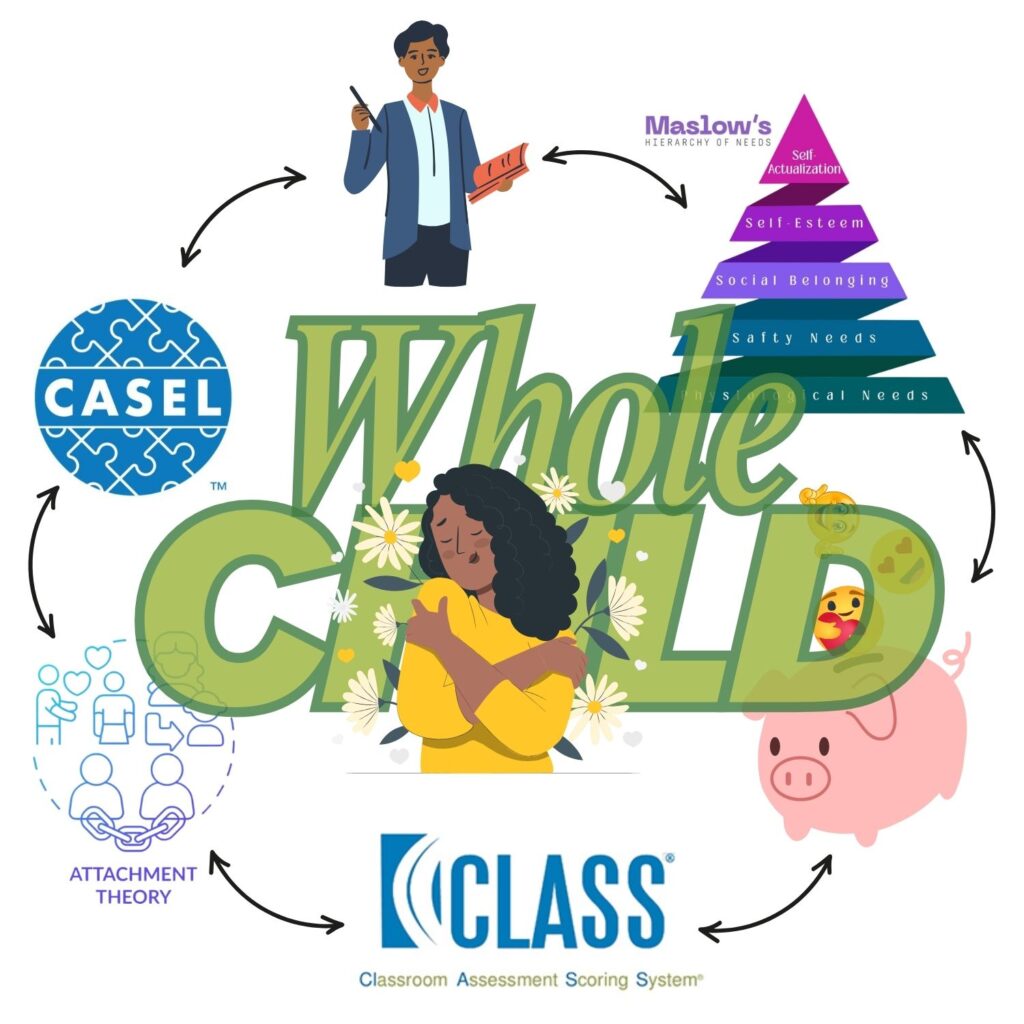
Everything you have explored so far, including Maslow’s hierarchy, CASEL’s SEL framework, attachment theory, CLASS, the Emotional Bank Account, and the Leader teaching style, points to one simple truth: when students feel safe, connected, and supported, they learn more and thrive.
This is about more than theory. It is about your students walking into class ready to learn because they know they belong. It is about fewer power struggles, more meaningful conversations, and a classroom that feels calm, focused, and full of growth.
This page gives you practical tools to reflect on your teaching and see where you are thriving and where you can grow. The self-assessments will help you spot patterns in your interactions, strengthen relationships, and make intentional changes that benefit every student.
Your students deserve a classroom where they feel valued, and you deserve a classroom that feels joyful and manageable. This is where that starts.
CLASS Emotional Support Self-Observation
Reflect on Emotional Support in Your Classroom
Welcome to the CLASS Emotional Support Self-Observation Tool.
This reflection is adapted from the CLASS framework, so you can pause, notice, and reflect on your own classroom interactions rather than being observed by someone else.
Take a few quiet minutes, think about a recent lesson, and write what you notice about student engagement, teacher and student interactions, and classroom climate.
This is not an evaluation. Your answers are for your own growth and can help you identify areas to celebrate and areas to strengthen.
Conclusion:
You have completed your reflection. Now use what you discovered to guide your next steps.
Look back over your answers. Each question you just reflected on points to an area that builds strong teacher and student relationships.
• If most of your notes celebrate joy, humor, and warmth, your strength is creating a positive classroom tone. Your next step may be deepening trust and belonging by inviting more student voices into lessons.
• If you noticed times when you missed student signals or responded late, focus on teacher awareness and responsiveness. Practice scanning the room, pausing to check in with students, and being consistent in your follow-through.
• If you saw fewer examples of encouraging words or students taking risks, work on encouragement and support. Find ways to recognize effort, not just results, and celebrate small successes.
• If students seem hesitant to ask for help, your goal is to strengthen classroom safety. Show students that mistakes are part of learning and that you are there to help.
Choose one of these areas as your focus and write a small, specific step you will take this week to grow in that direction.
On the next page, you will find strategies and activities you can try right away to strengthen the area you chose and move closer to the Leader teaching style.
SEL & Emotional Intelligence Survey
Discover your strengths in building student trust.
This quick survey is designed to help you reflect on how well you support students’ social and emotional needs in your classroom. The statements encourage you to think about how you model self-control, notice student emotions, respond with empathy, and create opportunities for students to connect with each other.
When you take a moment to pause and reflect, you get a clearer picture of what your classroom feels like for your students. The more aware you are of their emotional needs and your own responses, the easier it becomes to build a classroom where students feel safe, valued, and ready to learn.
How to Use This Tool
Read each statement honestly and choose the response that best describes how often that behavior happens in your classroom. Your answers are for your own growth, not for anyone else.
Making Sense of Your Results
-
A higher score suggests that your classroom already provides strong emotional support and a sense of belonging. Celebrate that progress and think about which behaviors you can keep consistent.
-
A lower score shows areas where you might focus more attention. This is not about judgment; it is about opportunity.
After reviewing your answers, choose one or two areas you would like to strengthen first. You can then explore relationship-building activities, classroom routines, and reflection practices from the strategy pages to help you grow in those areas.
How to Read Your Results
You now have two scores — one for Emotional Intelligence (EQ) and one for Social-Emotional Learning (SEL). Each score shows how often you model emotional awareness, support student needs, and create a connected classroom.
Look at where your scores fall for both EQ and SEL, using the levels below. Notice whether one area is stronger than the other. This can help you decide where to focus first.
Remember, these results are not about judgment — they are a starting point for growth. If your scores are lower in one area, it simply shows you where to invest a little extra attention to create the strongest possible teacher–student relationships.
Emotional Intelligence (EQ) Results
Your EQ score reflects how well you model emotional awareness, self-regulation, and empathy in the classroom.
Level 1 – Needs Attention (Score 5–11):
You may find it challenging to stay calm, recognize students’ emotions, or model self-control consistently. Focus on building your own emotional awareness first.
Suggested Actions: Practice mindfulness or breathing techniques before class, model calm responses, and seek feedback from a trusted colleague on how your emotions show up in class.
Level 2 – Emerging (Score 12–16):
You are beginning to recognize and respond to emotions, but there is room for more consistency.
Suggested Actions: Choose one emotion regulation strategy to use daily and make a habit of labeling emotions (yours and your students’) out loud.
Level 3 – Strengthening (Score 17–21):
You regularly model respect and self-control and notice student emotions, but there are moments where stress impacts your response.
Suggested Actions: Continue using emotional check-ins for yourself and students, and practice pausing before reacting in challenging situations.
Level 4 – Thriving (Score 22–25):
Your emotional presence sets the tone for the classroom. Students see you as calm, consistent, and empathetic even under pressure.
Suggested Actions: Mentor colleagues, share your strategies, and challenge yourself to notice and respond to even subtle emotional cues.
Social-Emotional Learning (SEL) Results
Your SEL score reflects how well you support students’ sense of belonging, growth, and connection.
Level 1 – Needs Attention (Score 5–11):
Students may not feel fully supported or connected. Rules might feel inconsistent, or opportunities to share feelings are limited.
Suggested Actions: Focus on learning student names, greeting them daily, and building a few simple, predictable routines.
Level 2 – Emerging (Score 12–16):
You are making efforts to build relationships, but they may not reach every student yet.
Suggested Actions: Start relationship-building activities (like sharing circles) once a week and praise students for effort, not just outcomes.
Level 3 – Strengthening (Score 17–21):
Students know they are supported and have chances to share their voice, though a few might still feel disconnected.
Suggested Actions: Strengthen peer-to-peer connection by adding community-building activities like collaborative group work or class jobs.
Level 4 – Thriving (Score 22–25):
Your classroom feels like a community. Students trust you, engage with each other, and take risks in learning.
Suggested Actions: Keep your practices consistent and explore advanced strategies like student-led projects or peer mentoring.
When you are ready, explore the Relationship Building Strategies page for activities, routines, and reflection practices that match your focus area. Choose one or two small steps to try first and see how they shift the climate of your classroom.
Mapping Your Classroom Connections
Make sure every student has a trusting relationship at school.
Intro
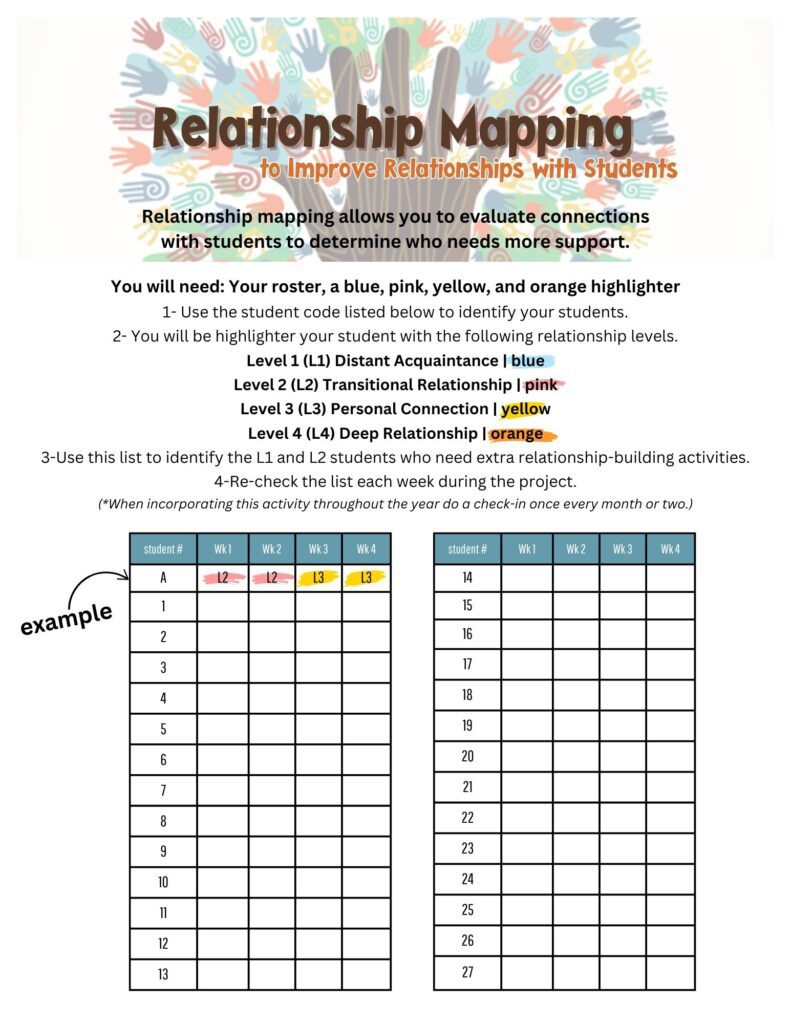
Every student needs at least one trusted adult at school, someone who notices when they are having a hard day, celebrates their successes, and believes in their potential. Relationship Mapping is a simple way to see which students feel connected and which ones may be slipping through the cracks.
By mapping your relationships, you get a clearer picture of who you connect with most often, and who might need more intentional attention. This process helps you focus your time and energy so that every student feels seen, supported, and ready to learn.

Find and strengthen every student connection
This tool helps you take a clear look at the relationships in your classroom. When you know which students feel connected and which may not have a strong, trusted adult, you can be more intentional about building those connections. Relationship mapping helps ensure that every student feels seen, valued, and supported.
How to Use It:
Write down each student’s name on the map, mark which students you have a strong relationship with and which you do not, and, if possible, compare your map with other teachers or staff to see who else students are connected to in the school.
Making Sense of Your Map:
When your map is complete, pause and reflect. Which students have no strong connections? These are your highest-priority students. Are there students connected to other adults but not you? Plan small, intentional actions to build your own connection with them. Are there students who are connected only to you? Think about ways to help them build relationships with peers and other staff members. Which students have many connections? Consider how to keep those relationships strong and consistent.
Next Steps:
Choose one or two students from your map to focus on first. Start with small actions like greeting them at the door, asking about their interests, or checking in with them individually. When you are ready, explore the Relationship Building Strategies page for specific activities and routines to strengthen connections with priority students. Small, consistent actions can make a big difference in how safe and supported students feel in your classroom.
Take a few minutes to think about what your map shows you. Which students will you focus on first? What small action can you try this week to build or strengthen that connection? How will you know if your efforts are making a difference? Write down one or two next steps and put them where you will see them every day. Even small actions, done consistently, build trust over time.
SEL Well-Being Check-in
Take the pulse of your classroom climate.
Intro
our students’ emotional well-being matters just as much as their academic success. When students feel safe, valued, and supported, they are ready to learn. A well-being check-in gives you a quick way to see how your students are doing on any given day and helps you catch concerns early before they grow.
This tool is designed to help you keep a regular pulse on how your class is feeling. You can use it at the start of the day, after lunch, or before dismissal, anytime you want to give students space to share. When you make checking in a habit, you send a powerful message that their feelings matter.

Directions for Using This Tool
Read each statement and select how often the behavior happens in your classroom. Answer honestly, this is for your own reflection and growth, not for anyone else.
When you finish, review your scores for each area: Emotional Awareness, Self-Regulation, Empathy & Consistency, Relationship Building, and Student Voice/Classroom Community. Higher scores show where your classroom is strong. Lower scores show where you may want to focus extra attention.
Your scores will help you see which areas are strong and which might need more attention so you can build a classroom where students feel safe, supported, and ready to learn.
Scoring Key for Each Area
Use this guide to interpret your total score for each section:
21–25 – Thriving
This is a major strength for you. Your students consistently experience this support. Keep up the great work and consider sharing your strategies with colleagues.
16–20 – Strengthening
You are doing well in this area, but there is still room to grow. Focus on making your practice more consistent across all students and situations.
11–15 – Emerging
You are beginning to build strength in this area, but students may not experience it every day. Choose one or two small actions to focus on until they become habits.
5–10 – Needs Attention
This area may need a reset. Students might be missing important support here. Start with one simple change, like a daily routine or a short check-in, and build from there.
Emotional Awareness
Noticing your own emotions and those of your students helps you respond thoughtfully and create a classroom where students feel understood, safe, and supported. Explore practical ways to strengthen emotional awareness on the Relationship Building Strategies page.
Self-Regulation
Paying attention to how you handle stress and challenging moments allows you to model calm, respectful behavior and keep expectations clear. This creates a classroom where students can focus on learning and feel secure. Find techniques to strengthen your self-regulation skills on the Relationship Building Strategies page.
Empathy & Consistency
Reflecting on how you balance caring for students’ feelings with holding them accountable builds trust and helps students see that expectations are fair and mistakes are learning opportunities. Learn more ways to build empathy and consistency on the Relationship Building Strategies page.
Relationship Building
Considering whether every student feels seen, known, and supported helps you focus on building strong connections. Positive teacher–student relationships form the foundation of belonging, motivation, and engagement. Explore ideas for strengthening relationships on the Relationship Building Strategies page.
Student Voice & Belonging
Encouraging students to share their thoughts, feelings, and ideas gives them ownership of their learning and helps them feel valued. See strategies to elevate student voice on the Relationship Building Strategies page.
Classroom Community
Building a classroom where students work together, solve problems as a group, and support each other’s learning fosters collaboration, respect, and belonging. Discover community-building activities on the Relationship Building Strategies page.